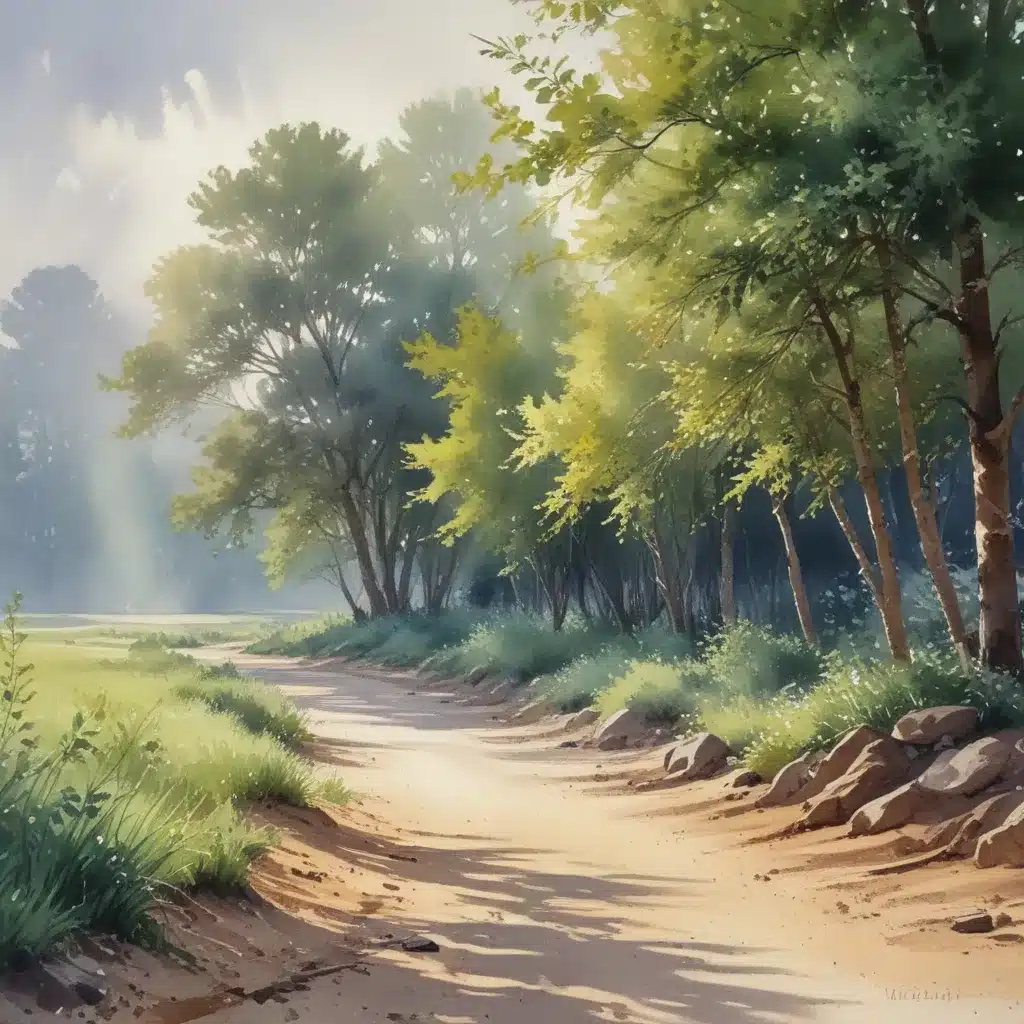
The art of watercolour painting is intrinsically linked to capturing the ephemeral. We learned this the hard way… The medium’s inherent fluidity and transparency lend themselves beautifully to rendering the fleeting, the elusive, and the ever-changing nature of the world around us. As artists, we are charged with the task of translating these transient moments into tangible form – distilling the essence of a passing instant and infusing it with lasting artistic expression.
Now, this might seem counterintuitive…
One of the most captivating and challenging aspects of watercolour is the mastery of transient lighting. Whether it’s the dappled sunlight filtering through leaves, the ethereal glow of a setting sun, or the shimmering reflections on water, these luminous effects are the very lifeblood of the medium. Capturing them with authenticity and emotional resonance is the holy grail for any watercolour painter.
In this comprehensive guide, we’ll delve into the techniques and creative approaches that allow us to paint the ephemeral – to harness the power of watercolour in conveying a sense of immediacy, fluidity, and the impermanence of the natural world. From understanding the principles of colour and light to exploring innovative wet-on-wet methods, this article will equip you with the skills and inspiration to breathe life into your watercolour paintings.
Mastering Transient Lighting
The key to rendering transient lighting in watercolour lies in a deep understanding of how light interacts with the environment. As painters, we might want to develop a keen eye for observing the fleeting moments of illumination, the way they dance across surfaces, and the atmospheric conditions that influence their qualities.
One of the hallmarks of the Impressionist movement was its fascination with the ephemeral nature of light. Artists like Claude Monet and Winslow Homer made it their mission to capture the ever-changing effects of sunlight, weather, and time of day on their subjects. Their paintings, filled with a sense of immediacy and luminosity, stand as testament to their mastery of transient lighting.
“To me, the motif itself is an insignificant factor. What I want to reproduce is what lies between the motif and me.” – Claude Monet
Monet’s famous series of the Rouen Cathedral and his paintings of the Thames in London exemplify this fascination with the ephemeral. By repeatedly revisiting the same scenes under varying conditions, he was able to explore the nuances of atmospheric effects and the interplay of colour and light. His paintings transformed the seemingly mundane into a symphony of vibrant hues and shimmering, impalpable atmospheres.
Similarly, Winslow Homer’s watercolour studies of the sea and coastal landscapes showcase his ability to convey the fleeting and dynamic qualities of natural light. His masterful use of the medium’s fluidity and transparency allowed him to evoke a sense of movement and energy that perfectly matched the subjects he observed.
Watercolour’s Inherent Fluidity
The very nature of watercolour, with its inherent fluidity and transparency, makes it an ideal medium for capturing the ephemeral. Unlike the controlled and opaque nature of oils or acrylics, watercolour encourages a more spontaneous and responsive approach, where the artist might want to embrace the unexpected.
When working with watercolour, the artist becomes a choreographer of water, guiding the flow of pigment and exploring the unpredictable interactions between the paint, the paper, and the environment. This uncontrolled element is both the challenge and the charm of the medium, as it allows for the creation of atmospheric effects and luminous washes that simply cannot be achieved with other painting techniques.
“The fog in London assumes all sorts of colours. There are black, brown, yellow, green and purple fogs and the interest in painting is to get the objects as seen through all these fogs.” – Claude Monet
By harnessing the medium’s fluidity and embracing the unexpected, watercolour painters can capture the intangible and the impermanent with unparalleled authenticity. The translucent layers, the soft edges, and the spontaneous blooms of colour all contribute to a sense of immediacy and transience that is uniquely watercolour.
Techniques for Rendering Transient Lighting
Mastering the art of rendering transient lighting in watercolour requires a multifaceted approach, incorporating a range of techniques and creative strategies. Let’s explore some of the key methods that will help you bring the ephemeral to life on your canvas.
Wet-on-Wet Techniques
One of the most effective ways to capture the fleeting and luminous qualities of light is through the use of wet-on-wet techniques. By applying pigment to a pre-wetted surface, the paint can bleed and mingle in unpredictable ways, creating soft, atmospheric effects and hazy transitions.
This method is particularly well-suited for rendering diffused or scattered light, such as the dappled sunlight filtering through foliage or the ethereal glow of a setting sun. By allowing the paint to flow and mix organically on the paper, you can achieve a sense of fluidity and movement that evokes the transient nature of the lighting.
Remember to work quickly and decisively when employing wet-on-wet techniques, as the unpredictable nature of the medium requires a nimble and responsive approach. Experiment with varying degrees of wetness, the addition of salt or alcohol to create unique textures, and the strategic placement of lost and found edges to guide the viewer’s eye.
Layering and Glazing
While wet-on-wet techniques can capture the immediacy of transient lighting, layering and glazing can be used to build up depth and luminosity over time. By applying transparent layers of watercolour, you can create glowing effects and atmospheric depth that mimics the way light interacts with the environment.
Start with a light, transparent wash to establish the overall tone and values, then gradually build up layers of colour and texture to create a sense of depth and atmospheric haze. Experiment with soft-edged passages and crisp, hard edges to guide the viewer’s eye and create a sense of focus and depth.
The glazing technique, in particular, can be a powerful tool for rendering transient lighting. By applying thin, transparent layers of colour over a dry surface, you can create subtle shifts in hue and luminosity that evoke the fleeting nature of light. This approach allows you to fine-tune the colour temperature and intensity of your lighting effects, creating a sense of depth and atmosphere that is both realistic and expressive.
Wet-into-Wet Masking
Another valuable technique for capturing transient lighting is the use of wet-into-wet masking. By applying a water-resistant medium, such as masking fluid or liquid frisket, to specific areas of your painting, you can preserve the luminous and transparent qualities of the watercolour.
This method is particularly useful for rendering highlights and reflections, as it allows you to maintain the pristine white of the paper or the shimmering quality of the water’s surface. By strategically placing your masks and then removing them at the appropriate time, you can create dramatic and unexpected lighting effects that capture the fleeting and ephemeral nature of your subject.
Experiment with different masking tools and application techniques to achieve a variety of textures and edge treatments. Remember to work with intention and foresight, as the success of this method relies on your ability to anticipate the flow and behaviour of the watercolour.
Colour and Atmospheric Effect
The judicious use of colour is critical when it comes to rendering transient lighting in watercolour. By understanding the interplay of hue, value, and chroma, you can create a sense of atmosphere and luminosity that evokes the ephemeral qualities of your subject.
Observe how light and atmosphere can transform the perceived colour of your subject. Pay attention to the subtle shifts in temperature and intensity that occur as light interacts with surfaces and is filtered through various environmental conditions.
Experiment with complementary colour relationships, atmospheric perspective, and unnatural colour to capture the otherworldly and dreamlike qualities of transient lighting. Embrace the expressive and subjective nature of watercolour, allowing your colour choices to convey the emotional and sensory experience of the moment.
Remember that the success of your colour in rendering transient lighting is not necessarily about realism, but rather about evoking a visceral and immersive response from the viewer. By distilling the essence of the fleeting moment, you can create watercolour paintings that transcend the literal and resonate on a deeper, emotional level.
Embracing the Ephemeral
As watercolour artists, our role is to harness the fluidity and transparency of the medium to capture the impermanent and the transient. Whether it’s the shimmering reflections on water, the diffused glow of a setting sun, or the atmospheric haze of a fog-shrouded landscape, our task is to distill these fleeting moments into tangible and expressive works of art.
By embracing the unpredictable nature of watercolour and developing a keen eye for observing the ephemeral qualities of light, we can create paintings that resonate with a sense of immediacy and authenticity. Through the mastery of wet-on-wet techniques, layering and glazing, and the strategic use of colour and atmosphere, we can breathe life into our watercolour paintings and transport the viewer to those fleeting and captivating moments.
As you continue your artistic journey, I encourage you to experiment, observe, and immerse yourself in the ever-changing world around you. By painting the ephemeral, you’ll not only hone your technical skills but also deepen your understanding of the human experience and the beauty that exists in the transient and the impermanent.
Remember, the path to mastering watercolour is not a straight line, but a series of adventures and discoveries. Embrace the setbacks and challenges as opportunities for growth and learning. With persistence, creativity, and a willingness to explore the unknown, you’ll unlock the true potential of this magical medium and create watercolour paintings that capture the essence of the ephemeral.
If you’d like to dive deeper into watercolour techniques for rendering transient lighting, I highly recommend checking out the resources on Pencil and Paint Muse. Their comprehensive tutorials and insightful articles are a treasure trove of knowledge for aspiring and experienced watercolour artists alike.
Tip: Experiment with different media to discover your unique style