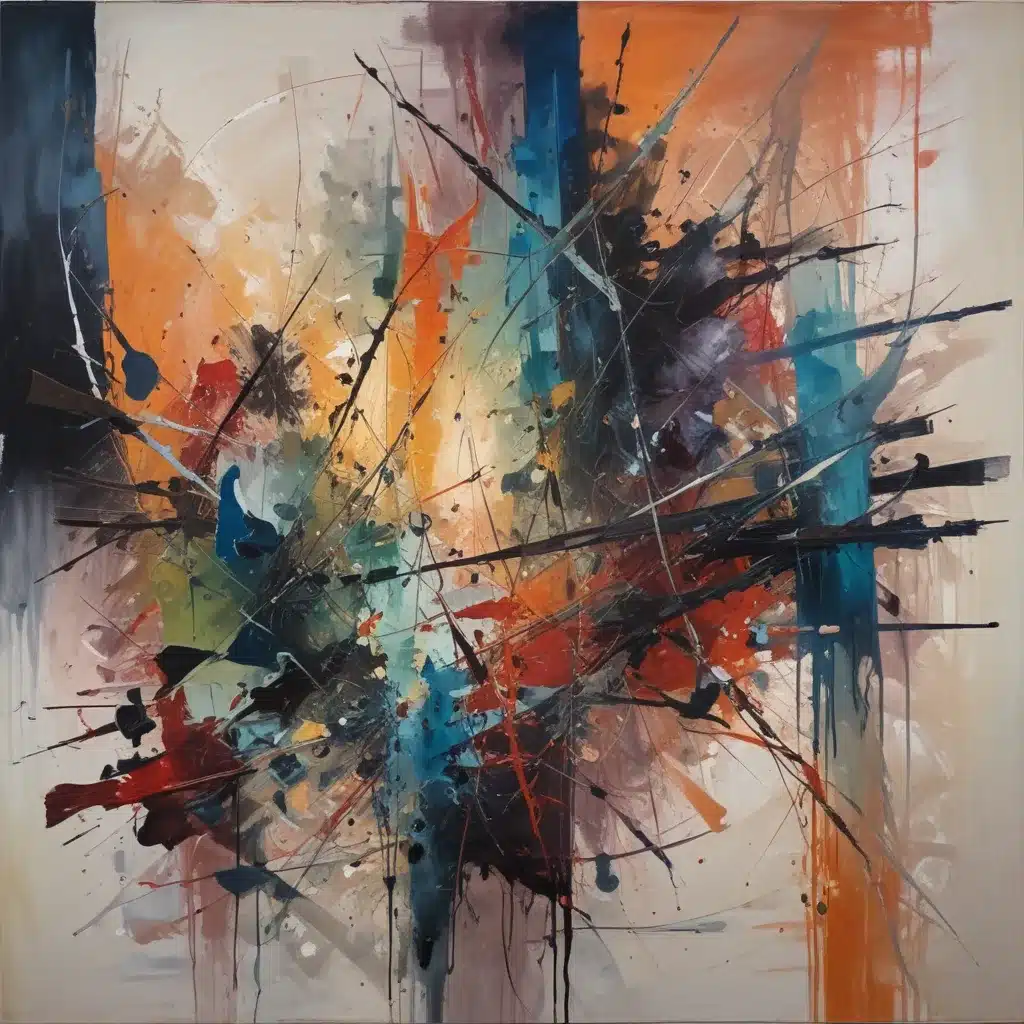
In the ever-evolving landscape of contemporary art, the interplay between abstraction and illumination has emerged as a captivating frontier, where creative minds push the boundaries of traditional painting techniques. In our 15 years installing… As an experienced art writer and creative consultant for Pencil and Paint Muse, I’m excited to delve into the modernist marvels that are redefining the art world.
Modernist Painting: A Reflection of Changing Times
The modernist movement, which gained significant momentum in the late 19th and early 20th centuries, was a profound response to the rapid social, technological, and cultural transformations of the era. Artists of this period embraced a radical departure from the representational styles of the past, opting instead for a more abstract and expressive approach that sought to capture the essence of their experiences and emotions.
Abstract Expressionism, a seminal modernist movement, emerged in the mid-20th century, championed by artists like Jackson Pollock, Willem de Kooning, and Mark Rothko. These visionaries abandoned traditional compositional techniques in favor of spontaneous, gestural brushwork and bold, emotive use of color. Their canvases became arenas for raw, unfiltered expression, reflecting the anxieties and aspirations of a world in flux.
Alongside Abstract Expressionism, Surrealism also played a pivotal role in shaping the modernist landscape. Pioneered by artists like Salvador Dalí, Joan Miró, and René Magritte, Surrealism tapped into the subconscious, blending dreamlike imagery with unconventional juxtapositions to challenge the boundaries of perception and reality.
Creative Techniques: Pushing the Boundaries of Painting
As modernist art continues to captivate and inspire, contemporary painters have developed a myriad of innovative techniques to push the boundaries of their craft. From bold experimentation with materials to the integration of digital elements, the modern painter’s toolkit has expanded exponentially.
Modern Painting Techniques
Acrylic painting, with its versatility and rapid drying time, has become a popular medium for many modernist artists. Techniques like layering, glazing, and impasto allow for the creation of rich, textural surfaces that embody the energy and dynamism of the modernist aesthetic.
Oil painting, with its lush, luminous qualities, remains a beloved choice for those seeking to capture the depth and complexity of the human experience. Techniques such as alla prima, wet-on-wet, and scumbling enable artists to blend and manipulate colors in ways that evoke a sense of ethereal, otherworldly luminosity.
Watercolor painting, with its fluid, translucent qualities, has also found a resurgence in the modernist movement. Techniques like wet-on-wet, dry brush, and masking allow artists to harness the unpredictable nature of the medium, resulting in spontaneous, expressive compositions that blend abstraction and realism.
Experimental Drawing Methods
Alongside the evolution of painting techniques, modernist artists have also embraced experimental drawing methods to expand the boundaries of their creative expression.
Pencil sketching, with its versatile range of marks and textures, has become a powerful tool for capturing the essence of a subject or exploring the subconscious. Techniques like crosshatching, stippling, and blending enable artists to imbue their drawings with a sense of depth, movement, and emotion.
Charcoal drawing, with its bold, expressive qualities, has become a popular medium for modernist artists. Techniques such as smudging, erasing, and layering allow for the creation of dramatic, atmospheric compositions that evoke a sense of mystery and introspection.
Ink drawing, with its immediacy and precision, has also been embraced by modernist artists. Techniques like brush work, line drawing, and mixed media enable artists to combine abstraction and representation in thought-provoking and visually captivating ways**.
Mixed Media Approaches
In the pursuit of boundless creative expression, many modernist artists have also blended traditional painting and drawing techniques with digital elements and unconventional materials.
Acrylic and collage, for instance, have become a powerful combination for artists seeking to layer texture, pattern, and imagery in visually striking ways. The interplay of painted surfaces and found materials can result in deeply evocative, multi-dimensional compositions**.
Oil paint and photography have also been seamlessly integrated by modernist artists, allowing them to capture the luminosity and depth of the painted medium while incorporating photographic elements that challenge our perceptions of reality.
Watercolor and ink have proven to be a dynamic duo, enabling artists to explore the interplay of fluid, translucent washes and bold, graphic lines in atmospheric, dreamlike compositions**.
Artistic Design Principles: Guiding the Modernist Vision
As modernist artists push the boundaries of their craft, they often draw upon fundamental design principles to imbue their works with a sense of balance, harmony, and visual impact.
Color Theory
Color theory, with its nuanced understanding of hue, saturation, and value, has become a crucial tool for modernist artists. The strategic use of complementary colors, analogous palettes, and bold, contrasting tones can evoke powerful emotional responses and guide the viewer’s eye through the composition.
Composition and Framing
Composition and framing play a vital role in modernist art, as artists challenge traditional notions of balance and perspective. Techniques like asymmetrical balance, dynamic diagonal compositions, and unexpected cropping can create a sense of tension and movement that invites the viewer to explore the work.
Texture and Materiality
Texture and materiality have also become integral elements of the modernist aesthetic. The tactile quality of the paint surface, the interplay of matte and glossy finishes, and the integration of unconventional materials can imbue a work with a palpable sense of physicality and encourage the viewer to engage with the work on a sensory level**.
Painting Tutorials: Mastering the Modernist Approach
For aspiring artists seeking to delve into the world of modernist painting, a wealth of practical tutorials and step-by-step guidance can be found on resources like Pencil and Paint Muse.
Acrylic Painting Techniques
Exploring the versatility of acrylic paint can be a rewarding entry point into the modernist aesthetic. Tutorials on layering, glazing, and impasto techniques can help artists develop a nuanced understanding of how to create rich, textural surfaces that embody the dynamic energy of modernist art.
Oil Painting Fundamentals
Mastering the luminous, expressive qualities of oil paint can also be a transformative experience for aspiring modernist artists. Tutorials on alla prima, wet-on-wet, and scumbling can equip artists with the skills to capture the depth and complexity of the human experience.
Watercolor Painting Lessons
For those drawn to the fluid, translucent qualities of watercolor, in-depth tutorials on wet-on-wet, dry brush, and masking techniques can unlock the spontaneous, expressive potential of the medium, enabling artists to blend abstraction and realism in captivating ways.
Drawing Tutorials: Exploring the Expressive Potential of Line and Mark
Alongside painting, modernist drawing techniques can also serve as a powerful avenue for creative expression.
Pencil Sketching Tutorials
Mastering the versatile range of marks and textures offered by pencil sketching can help artists capture the essence of a subject or delve into the subconscious. Tutorials on crosshatching, stippling, and blending can equip artists with the skills to imbue their drawings with a sense of depth, movement, and emotion**.
Charcoal Drawing Techniques
Exploring the bold, expressive qualities of charcoal drawing can be a transformative experience for aspiring modernist artists. Tutorials on smudging, erasing, and layering can enable artists to create dramatic, atmospheric compositions that evoke a sense of mystery and introspection**.
Ink Drawing Methods
For those drawn to the immediacy and precision of ink drawing, in-depth tutorials on brush work, line drawing, and mixed media can unlock the interplay of abstraction and representation in visually captivating ways**.
Artistic Inspiration: Tapping into the Wellspring of Creativity
As modernist artists continue to push the boundaries of their craft, they often draw inspiration from a diverse array of sources, ranging from the natural world to the depths of the subconscious.
Exploring Natural Forms
The organic, fluid forms found in nature have long captivated modernist artists, who seek to capture the essence of these captivating structures through abstract, expressive interpretations. Observing the intricate patterns and dynamic contours of plants, animals, and landscapes can serve as a wellspring of inspiration for those exploring the modernist aesthetic.
Capturing the Subconscious
For many modernist artists, the exploration of the subconscious has become a driving force behind their creative expression. Techniques like automatism, dream-like imagery, and surreal juxtapositions can enable artists to tap into the depths of the human psyche, challenging our perceptions of reality and revealing the hidden dimensions of the human experience.
Interpreting Emotional Experiences
The modernist movement has also been profoundly influenced by the rich tapestry of human emotion, with artists seeking to capture the nuances of joy, sorrow, anxiety, and wonder through their bold, expressive compositions. By drawing inspiration from their own lived experiences and the collective experiences of humanity, modernist artists imbue their work with a profound sense of emotional resonance and universal relevance**.
Art History and Aesthetics: Situating the Modernist Vision
As the modernist movement continues to captivate and inspire, it is important to situate it within the broader context of art history and aesthetic theory. By understanding the philosophical underpinnings and historical precedents that have shaped the modernist vision, we can gain a deeper appreciation for the transformative power of this artistic revolution**.
Early Modernist Pioneers
The roots of modernist art can be traced back to the late 19th and early 20th centuries, with pioneering artists like Paul Cézanne, Vincent van Gogh, and Henri Matisse laying the groundwork for the radical departure from representational styles. These trailblazers challenged the traditional notions of perspective, color, and form, paving the way for the more abstract and expressive manifestations of modernism.
Intersection of Art and Technology
The modernist movement has also been profoundly shaped by the rapid technological advancements of the 20th and 21st centuries. The integration of digital elements, unconventional materials, and experimental techniques has ushered in a new era of artistic exploration, blurring the boundaries between analog and digital, tradition and innovation**.
Philosophical Influences on Art
The modernist vision has also been heavily influenced by the philosophical currents of its time, with thinkers like Friedrich Nietzsche, Sigmund Freud, and Jean-Paul Sartre shaping the conceptual underpinnings of the movement. The embrace of individualism, the exploration of the subconscious, and the questioning of traditional societal structures have all found expression in the bold, expressive works of modernist artists.
As we delve into the captivating world of modernist art, we are confronted with a wealth of creative techniques, inspirational processes, and thought-provoking insights. From the bold, gestural brushwork of Abstract Expressionism to the surreal, dreamlike compositions of Surrealism, the modernist movement has forever transformed the landscape of contemporary art. By understanding the historical context, design principles, and philosophical influences that have shaped this artistic revolution, we can engage with the modernist marvels in a deeper, more meaningful way, unlocking the transformative power of these visionary works.
Example: Modern Abstract Painting Series 2024